
What Monarch’s Elevate Session Revealed About Leading Through Growth
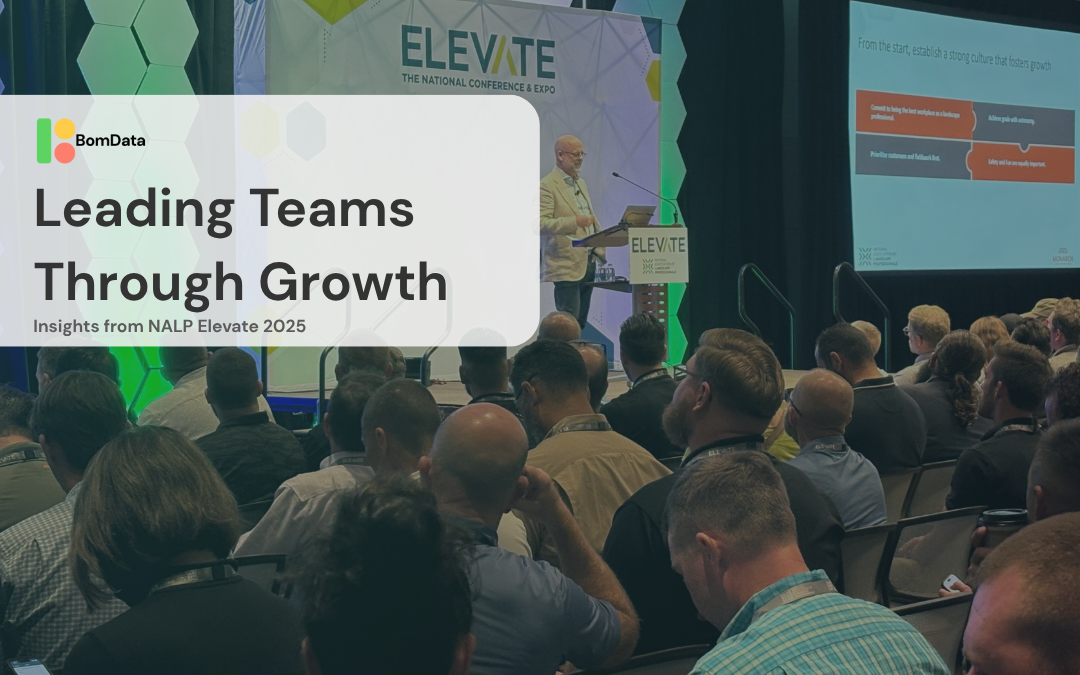
Attending Elevate always leaves me with pages of notes, but this year one session stood out. Monarch’s leadership talk wasn’t about tools or tactics—it was about the habits that keep fast-growing companies grounded, aligned, and connected to their field teams. These are the kinds of takeaways that make you rethink how your own organization leads through change. Here’s what rose to the top.
When Monarch Landcape Companies‘ CEO, Brian Helgoe, took the stage at Elevate, the room leaned in.
Not because he promised a new framework or a trendy operating system — but because he runs one of the fastest-growing companies in our industry and still talks like someone who hasn’t forgotten what it feels like to start at zero.
His message was simple and refreshing:
Culture doesn’t happen by accident — especially when you grow fast.
You build it the same way you build a strong team: request by request, conversation by conversation, habit by habit.
Here are the ideas that stood out most:
1. “Everyone Works for the Field.”
Brian’s org chart is an upside-down carrot. The CEO sits at the bottom.
The people closest to the work — crew leaders, foremen, field teams — sit at the top.
His philosophy is clear:
“If your job doesn’t support the people touching the plants, it’s not value-add.”
It’s a simple test every leader can use.
If an initiative makes field work easier, clearer, or safer → green light.
If it slows them down, distracts them, or adds noise → rethink it.
Commercial landscapers talk a lot about efficiency, but this is the cultural side of it.
Operational excellence starts with humility.
2. Relationships = Repeated Requests
Brian’s take on relationships was surprisingly tactical:
Strong relationships grow when you make requests — and respond to them.
Accepting larger requests expands trust. Avoiding them shrinks it.
It’s easy to forget this when we’re deep in schedules, budgets, and dashboards.
But the healthiest companies keep stretching themselves and their teams with requests that matter:
-
“Can you lead this morning huddle?”
-
“Can you walk a route with me and tell me what you’d improve?”
-
“Can you help redesign our training plan?”
When people rise to those requests, culture grows.
3. Standardize the Back Office Early. Be Patient With the Field.
This was one of the sharpest contrasts Brian drew, and one every growing company should note.
Back office changes need to be fast.
Monarch moves payroll, billing, and vendor payments into their systems within three weeks of every acquisition.
Why?
Because back-office inconsistency creates chaos.
But field operations need time — often 6–18 months — to adopt the “Monarch way.”
Brian isn’t pushing for instant conformity. He’s pushing for consistent support.
“If you’re going to grow, you have to decide what you’ll do for culture — and then actually do it.”
4. Routines Are What Scale, Not Pep Talks
Monarch’s daily communication rhythm is legendary:
-
6:00 a.m. → Crew huddles with Branch Managers
-
6:30 a.m. → Branch managers with regional managers
-
7:30 a.m. → Regional managers with ops leads
-
7:50 a.m. → Ops leads with Exec team
By 8 a.m., everyone has aligned on priorities.
It’s not glamorous. It’s not a new app.
It’s repeatable structure, and it’s why they can operate across 8 states without losing the plot.
This was a big takeaway:
You don’t scale culture — you scale the habits that reinforce culture.
5. Growth Requires Clarity, Not More Control
Brian spent almost zero time talking about dashboards, KPIs, or software.
Instead, he focused on this idea:
“Set expectations. Empower people. Ask one question: What can I do to help you?”
It’s the opposite of micromanagement.
And it’s the only sustainable way to manage 275 locations.
Commercial landscapers who feel stuck between “I need visibility” and “I don’t want to smother my team” should take note:
Visibility and empowerment can coexist — but only when expectations are clear.
6. Customer Retention Is the Only Thing You Control
This line got a lot of nods:
“Customers don’t fire companies — they fire people.
And they stay for the same reason.”
His data backs it.
Branches with high manager engagement → higher retention.
Branches with weak leadership → retention in the 50s.
Retention isn’t mysterious.
It’s cultural and behavioral long before it becomes a number.
7. The Future Belongs to Companies That Remove Barriers
When asked about technology, Brian was blunt:
-
A company that size can’t run on whiteboards and magnets.
-
Route density is profitability.
-
Frontline labor is your biggest cost — improve it, and everything improves.
But he warned against “tech for tech’s sake.” The real purpose of technology is to remove friction:
-
Shorter windshield time
-
Clearer routing
-
Simpler communication
-
Faster customer updates
It mirrors everything we believe at BomData: Tech should reduce noise, not add to it.
Why This Session Mattered for Commercial Landscapers
Most companies are trying to solve the wrong problem first.
They focus on systems, software, or dashboards — all important — but ignore the cultural foundation required for any of it to matter.
Brian’s message was a needed reminder:
-
Growth starts with clarity.
-
Culture grows through consistent habits.
-
Leaders scale companies by serving the people doing the work.
If you want efficiency, retention, and better margins, this is where it begins.