
Why Being “Good at Aspire” Isn’t a Reason to Skip Better Tools
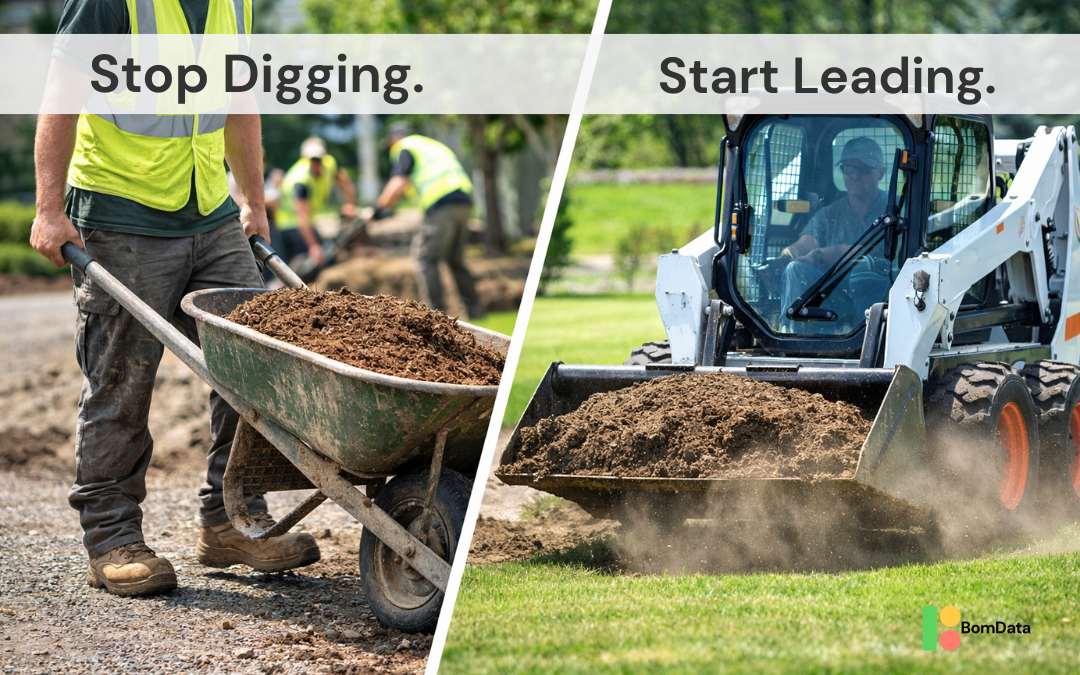
In commercial landscaping, no one expects a crew pushing wheelbarrows to keep up with a crew running a skid steer. Same people. Same effort. Completely different output.
And if you only had one skid steer, you wouldn’t give it to the weakest crew. You’d give it to your best one: the foreman who already knows how to run a job well, because that’s where the leap is biggest.
Skill doesn’t make leverage unnecessary.
It makes leverage more valuable.
That same logic applies to operations management, but this is where many companies hesitate.
“We’re Already Good with Aspire”
A common pushback we hear from commercial landscapers sounds like this:
“Our ops manager is already really good at navigating Aspire. He knows where everything is and has reports created, so we don’t really need another tool.”
On the surface, that feels reasonable: Aspire is a powerful tool with a wealth of data. But it skips the real question:
Is navigating Aspire the highest-value use of that person’s time?
Being good at Aspire usually means:
-
Knowing which reports to run
-
Remembering where issues tend to hide
-
Piecing together the story after something goes wrong
That’s real skill.
But it still requires going looking for problems.
Skill Doesn’t Remove Friction — It Just Pushes Through It
Even the best operations managers still spend time:
-
Digging through reports
-
Re-running views to confirm issues
-
Cross-checking numbers
-
Reacting after problems have already formed
Skill helps them push through that friction, but it doesn’t eliminate it.
Over time, that friction adds up.
Your best managers don’t become ineffective.
They become overloaded.
And the more capable they are, the more responsibility they absorb, often at the expense of higher-value work.
The Real Upgrade: From Navigation to Leadership
The real improvement isn’t about helping someone find things faster.
It’s about changing what they spend their judgment and experience on.
When problems are surfaced automatically and signals are clear:
-
Managers stop asking where should I look?
-
They spend more time coaching crews
-
They fix the right issues first
-
They prevent problems instead of explaining them later
That’s the same leap you see when you put a skilled operator in better equipment.
They don’t just do the same work faster.
They do better work.
Don’t Starve Your Best Operations Managers of Leverage
In the field, you don’t give better equipment to people because they’re struggling.
You give it to:
-
The people who will use it correctly
-
The people who spot opportunities others miss
-
The people who create the biggest return
Operations tools should work the same way.
Good managers don’t need less leverage because they’re capable.
They need more leverage because they’re valuable.
The Hidden Cost of “Getting By”
The real cost of skipping better operations tools isn’t the price of the software.
It’s the opportunity lost when your strongest operators spend hours navigating systems instead of leading.
That cost shows up as:
-
Delayed coaching
-
Issues discovered too late
-
Decisions made under pressure
-
Burnout in your best people
None of that appears neatly on a budget line.
But it shows up in margins, morale, and retention.
The Better Question to Ask
So instead of asking: “Can he already find this in Aspire?”
Ask: “Is this the best use of his time, experience, and judgment?”
That’s the difference between being really good at pushing a wheelbarrow
and running the machine that moves the whole job forward.
What This Looks Like in Practice
This is exactly why tools like BomData exist. Not to replace Aspire. Not to replace good managers. But to remove the friction that keeps strong operators stuck navigating instead of leading — by surfacing problems early, creating shared visibility, and turning data into a weekly habit instead of a scavenger hunt.
That’s leverage.
And that’s where real operational gains come from.