
The KPI Wake-Up Call: Turning Data Into Action in Your Landscaping Business
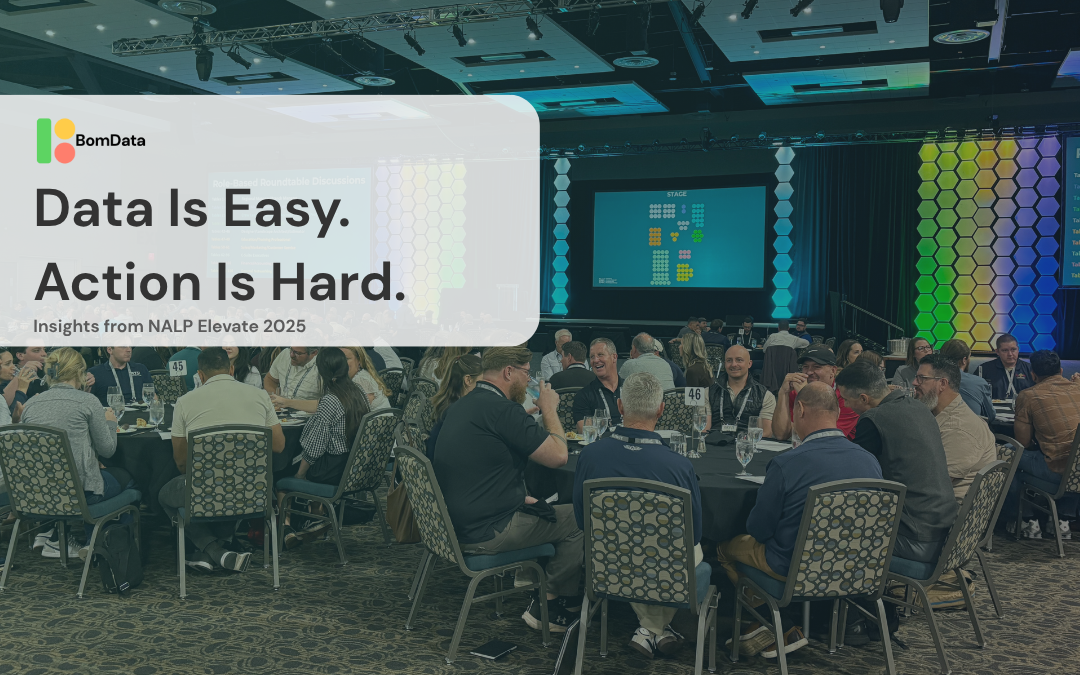
After attending the NALP Elevate 2025 conference, one thing was clear:
commercial landscapers aren’t short on data — they’re short on clarity.
Across sessions and conversations, the theme kept coming up: how to turn information into action.
Leaders talked about visibility, accountability, and culture — not technology for technology’s sake.
One of the most memorable sessions came from Steve Steele of Wilson360, whose talk on “Turning Data Into Action” hit home for every operator in the room.
Steele didn’t just talk about metrics — he talked about behavior, and that distinction matters more than most people realize.
KPIs Don’t Just Measure Progress. They Shape It.
Every landscaping company tracks something — revenue, job hours, customer renewals, safety. But as Steele reminded us, KPIs aren’t just scoreboards. They’re strategic tools that guide how teams think and act.
He shared three familiar stories:
-
A construction manager celebrating 25% over budget on revenue, until he looked at gross margin.
-
A crew demanding a raise without realizing their quality scores had slipped.
-
A leadership team proud of “cash coming in” but unaware that profitability was sinking beneath the surface.
The point? Without the right metrics, it’s easy to chase the wrong wins.
Start with Fewer KPIs — and Make Them Count
Steele broke KPIs into four simple categories:
Profitability, Efficiency, Growth, and Financial Health.
He warned that most companies fall into the trap of measuring too much, too inconsistently, and too far removed from what field teams can actually influence.
“If your people need a degree from MIT to understand how you calculate their bonus, they won’t trust the number.”
Instead, he challenged leaders to build consistency and transparency around just a few key measures — metrics that reflect both business performance and individual ownership.
The One KPI Worth Starting With
Steele’s favorite metric is refreshingly simple:
Gross Hourly Profit (GHP) — your gross margin dollars divided by your direct labor hours.
It answers one critical question:
How many gross margin dollars do you generate for every hour of labor?
If that number is rising, you’re getting more efficient or more profitable — ideally both.
If it’s falling, it’s time to dig into your estimating, scheduling, or crew performance.
And because it ties field production directly to financial outcomes, it’s the kind of KPI that managers and crews can both rally around.
Visibility Drives Behavior
Steele’s framework aligns perfectly with how we see operations data at BomData.
When metrics are timely, accurate, visible, and role-specific, they stop being reports and start being coaching tools.
A weekly dashboard or leaderboard doesn’t just tell people how they did — it reminds them what’s important.
When team members see those numbers consistently, they begin to own them.
That’s how culture shifts from reactionary to proactive.
Your KPI Audit Starts Here
If you’re not sure whether your current KPIs are driving the right behavior, start small.
Pick one — like Gross Hourly Profit — and track it for the next 8 weeks.
Then, make it visible. Talk about it in your L10s, branch huddles, and check-ins.
When your team can see progress in real time, accountability follows naturally.
BomData helps commercial landscapers turn KPIs into action — automatically.
See your efficiency, accuracy, and profitability metrics in one simple dashboard.