
Why Sales Goals Slip and How Weekly Sales Leaderboards Keep Teams on Track
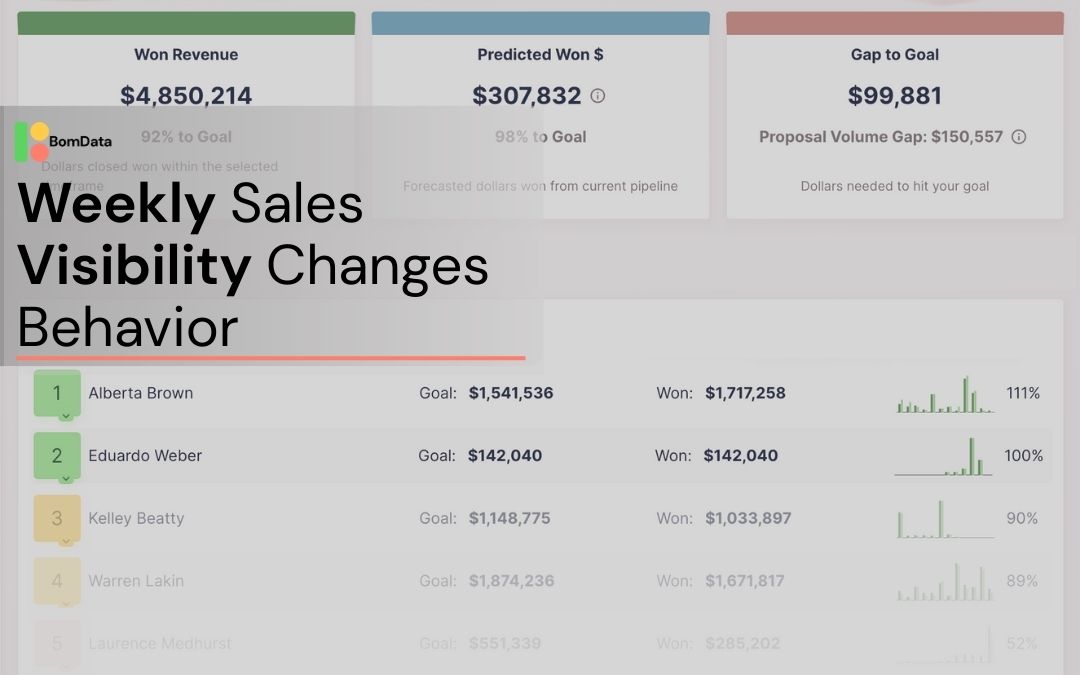
Commercial landscapers using Aspire have access to plenty of sales data.
What they often lack is a simple, shared view of performance across the entire sales team — the kind that drives accountability, competition, and early support before goals start drifting.
Most commercial landscaping sales teams don’t miss their number because of one bad month. They miss it because small signals go unnoticed, and often, unseen.
In many Aspire-based organizations, sales performance lives in silos. Each rep sees their own numbers. Leadership sees a pile of reports. But there’s no single place to quickly understand how the team is performing together.
Without a clear, side-by-side view:
-
It’s hard to spot who’s gaining momentum and who’s falling behind
-
Friendly competition never really takes hold
-
And the quiet peer-to-peer support that strong teams rely on never has a chance to start
Instead, proposal volume slows. Win rates slip. The pipeline looks “fine”… until it isn’t.
By the time leadership realizes there’s a problem, the quarter is already gone.
That’s why strong sales leaders don’t manage by gut feel or end-of-month reports.
They manage sales the same way they manage operations: with simple, shared weekly visibility.
What Sales Leaders Actually Need to See Each Week
A useful weekly sales view answers four practical questions:
1. Are we proposing enough work?
Proposal volume tells you whether future revenue is even possible.
2. Are we closing what we propose?
Win rate highlights pricing, scope, or coaching issues early, while there’s still time to adjust.
3. Are we on pace toward our goal?
Percent to goal keeps the team grounded in reality, not optimism.
4. Based on the current pipeline, are we likely to get there?
Predictions help leaders understand whether today’s pipeline supports tomorrow’s target, and how much more needs to be proposed to stay on track.
You don’t need dozens of metrics to lead sales well. You need the right ones, reviewed consistently.
Why Most Sales Dashboards Fall Flat
Sales dashboards often fail for the same reasons operational dashboards do:
-
Too many charts
-
Too much historical data
-
Not enough clarity for a weekly conversation
Sales leaders end up exporting reports, rebuilding spreadsheets, or relying on instinct. Coaching becomes reactive. Forecasts become hopeful instead of honest.
And surprises show up late, when there’s little runway left.
Sales Leaderboards Built for Weekly Pacing
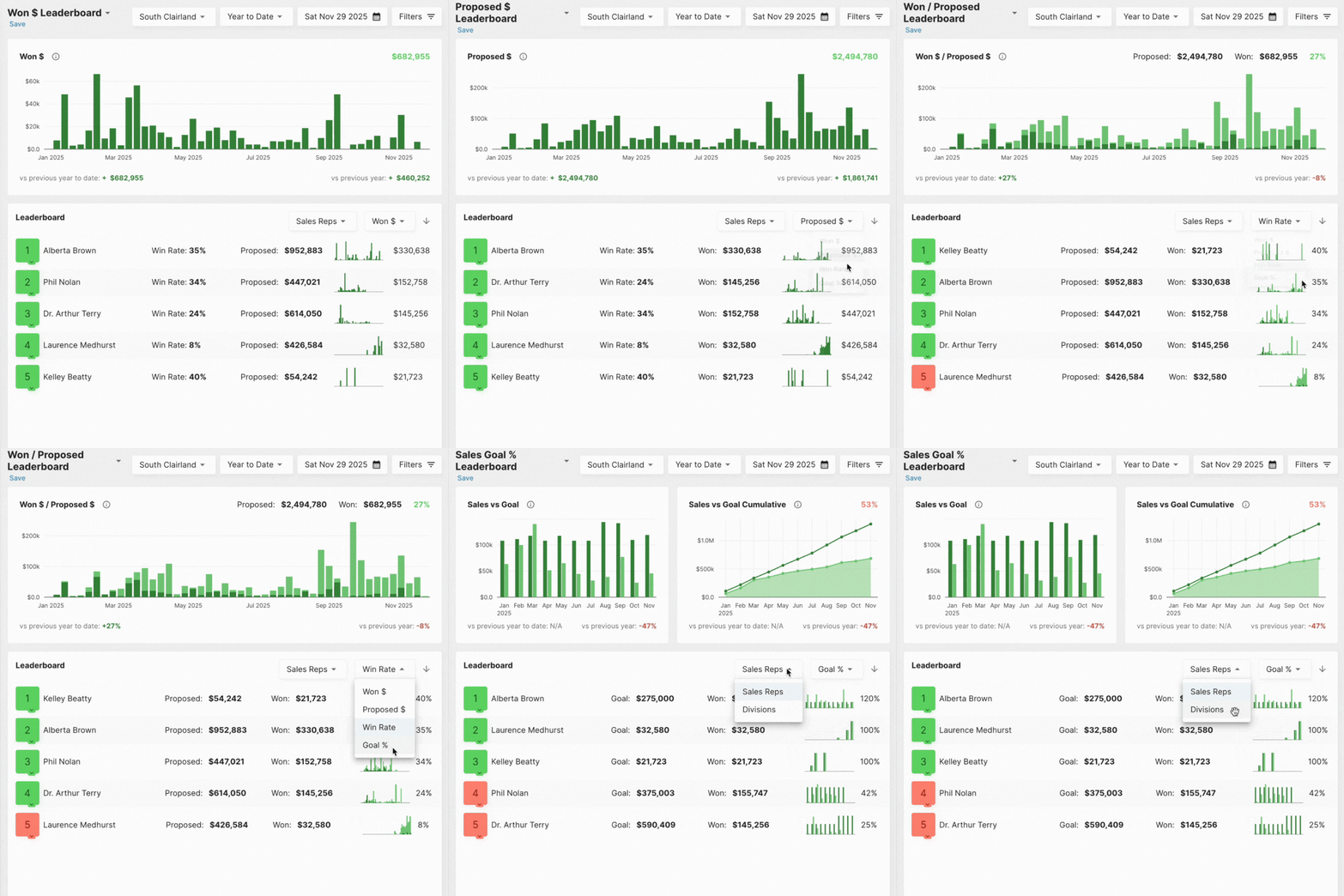
BomData’s Sales Leaderboards were built to support weekly sales leadership, not retrospective reporting.
They rank reps, branches, and divsions by:
-
Won %
-
Won $
-
Proposed $
-
% to Goal
On top of that, BomData looks at pipeline signals to estimate what is likely to close, and how much additional work needs to be proposed to realistically hit defined goals.
The goal isn’t pressure. It’s clarity.
When leaders can see pacing clearly, they can course-correct early instead of explaining results later.
How Sales Leaders Use This in Practice
Instead of asking, “Why didn’t we hit the number?” at the end of the quarter, leaders use weekly leaderboards to ask better questions:
-
Who’s closing well but needs more at-bats?
-
Who’s proposing plenty but struggling to convert?
-
If the pipeline behaves as expected, what gap still exists?
- What needs to be cleaned up to keep a healthy pipeline?
These aren’t post-mortems. They’re coaching conversations, happening while they still matter.
Ten minutes a week is often enough when everyone is looking at the same scorecard.